


CKS
Optimize your coating consultation experience
Our integrated digital platform lets you view full product information and submit inquiries conveniently.
Business Partner & Product Certification


Coating solutions for every area
-

Beijing Daxing International Airport
Products: Integrated Waterproofing Solutions
Areas: Buildings, Airport Terminals -

Wenchang Space Launch Site, China
Products: Building Restoration Solutions
Areas: Main Building Roof -

Shenzhen-Zhongshan Bridge
Products: Integrated Waterproofing Solutions
Areas: Subsea Tunnel -

Shenzhen Metro Line 1
Products: Integrated Waterproofing Solutions
Areas: Railway Waterproofing


Got a Question? Let Us Help You Out!

Small Particles in the Coating Film after Construction
Causes & Preventive Measures
- Do not use expired coatings or coatings that have exceeded the usable time after mixing.
- Insufficient mixing of two-component materials (either manual or mechanical mixing). Ensure thorough blending of mixed materials.
- Mixing containers are contaminated. Thoroughly clean mixing buckets before use.
- Incorrect material proportioning.
Poor Adhesion, Blistering or Low Bond Strength between Coating and Substrate
Causes & Preventive Measures
- Completely clean the substrate surface prior to coating application.
- Verify the substrate has adequate strength; it must not sand off, peel or become loose.
- No standing water is allowed on the substrate for water-based coatings.
- The substrate must be fully dry for solvent-based coatings.
- Apply a prime coat for the first layer of coating.
Main Causes of Blistering in Waterproof Membrane
The substrate at blister locations contains excessive moisture, or the substrate surface is uneven. Poor adhesion at depressions on the substrate or residual moisture inside the membrane will generate water vapor and internal air pressure as the ambient temperature rises, resulting in blistering of the waterproof membrane.
Causes of Cracking in Waterproof Membrane
- Linear cracking at the end joints of roof panels, caused by substrate deformation, thermal expansion and contraction under temperature variation, and uneven settlement of the building.
- Uneven laying of thermal insulation layers and inconsistent thickness of cement mortar leveling courses.Cracks in the leveling course due to substrate movement will further lead to irregular cracking of the waterproof membrane.
- Insufficient lap width or defective edge termination of the membrane, resulting in tensile cracking.
- Membrane cracking induced by aging and crazing, rupture of blisters, physical damage, inferior material quality, low elongation or poor tensile strength of the membrane.
- Low ambient temperature in winter may cause brittle cracking of the membrane.
- No additional membrane strip laid flat at the end joints of roof panels. The membrane lacks expansion allowance and cracks when roof panels shift.
Key Construction Points for Self-Adhesive Waterproof Membrane
- Evenly apply primer on the substrate before membrane installation. Lay the membrane promptly after the primer is fully dry.
- Completely remove the release film on the adhesive side of the membrane before laying.
- Slightly tension the high polymer modified bitumen waterproof membrane during rolling installation (avoid excessive slack). Fully expel trapped air beneath the membrane and roll firmly to ensure solid adhesion.
Construction Guidelines for Hot-Melted Waterproof Membrane
- Apply uniform heat across the full width of the membrane. Avoid overheating to prevent damage to the membrane carrier layer.
- Roll and lay the membrane immediately after hot melting. Roll thoroughly to exhaust air, ensuring the membrane is flat, tightly bonded and wrinkle-free.
- Stop rolling when a small amount of hot-melt adhesive extrudes from the membrane edges. Immediately scrape and seal the joints with the extruded adhesive.
- After the completion of the entire waterproof layer, seal all lap joints with sealant.
Classification of Pre-Applied & Wet-Laid Waterproof Membranes by Main Material
- Polymer Waterproof Membrane
- Bitumen-Based Polyester Carrier Waterproof Membrane
Applicable Waterproof Membranes for Underground Waterproofing Works
- High Polymer Modified Bitumen Waterproof Membrane
- Synthetic Polymer Waterproof Membrane
Functions of Plasticizer in Modified Bitumen
- Improve the low-temperature performance of bitumen compound.
- Act as a fluxing agent.
- Adjust the viscosity of bitumen compound to facilitate manufacturing and forming.
- Excessive addition will impair temperature sensitivity and bond strength of the bitumen compound.
Definition of Modified Bitumen
Modified bitumen is produced by blending base bitumen with polymer materials such as SBS and APP via chemical, physical and mechanical methods. The blend forms a continuous network structure or uniformly dispersed phase. This composite material inherits superior properties of polymers including elasticity, wear resistance, aging resistance, corrosion resistance and weatherability, thus optimizing the inherent performance of original bitumen.
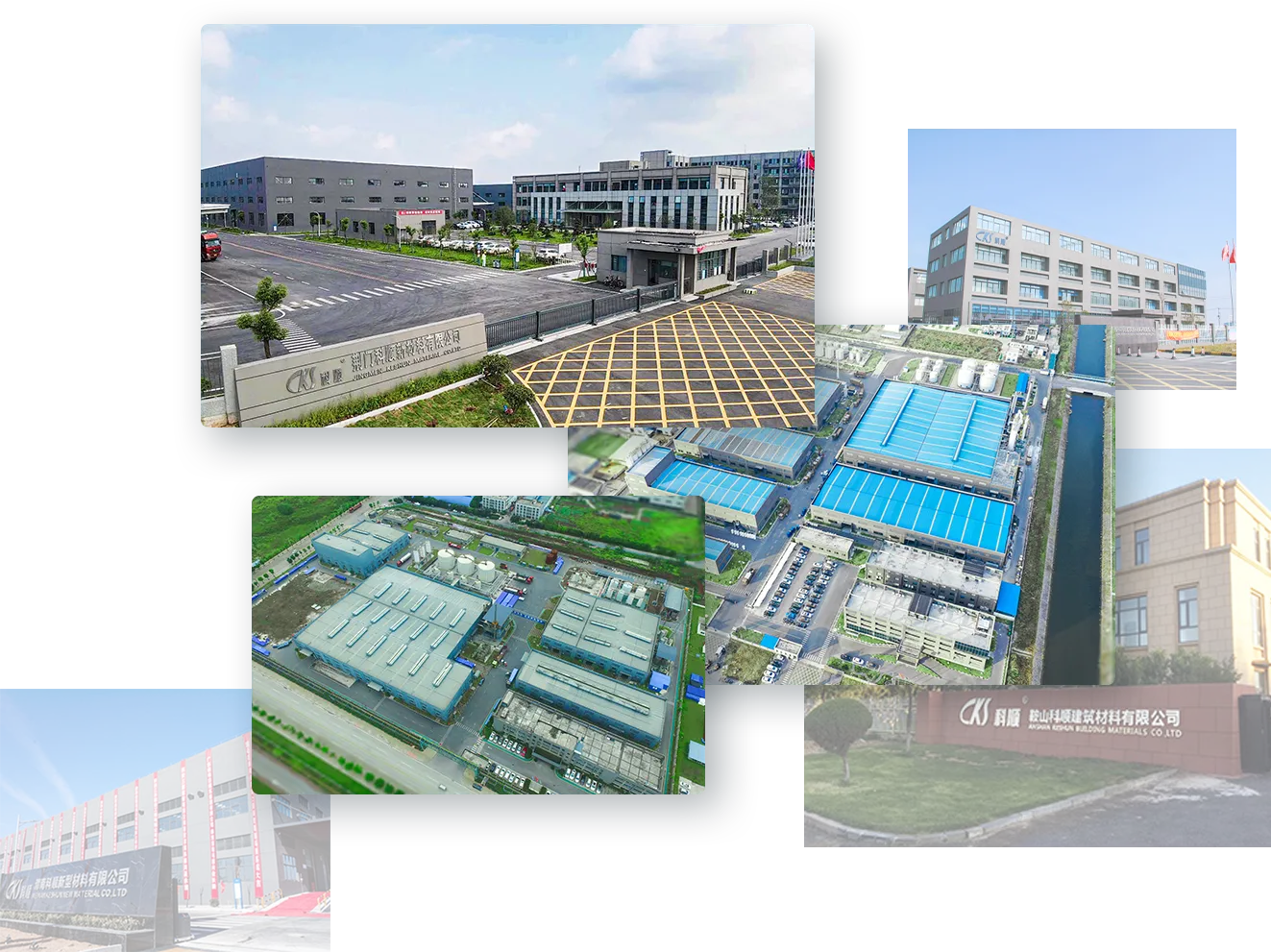
MANUFACTURING
CAPABILITY
 10+ PRODUCTION BASE
Based on our resource endowment, we are building a multi-center agile manufacturing system that combines large-scale comprehensive bases with regional satellite factories. Through the application of the Internet of Things and industrial big data technology, we have achieved rapid conversion and collaborative production of multiple bases.